
Dakota County Busted Mugshots
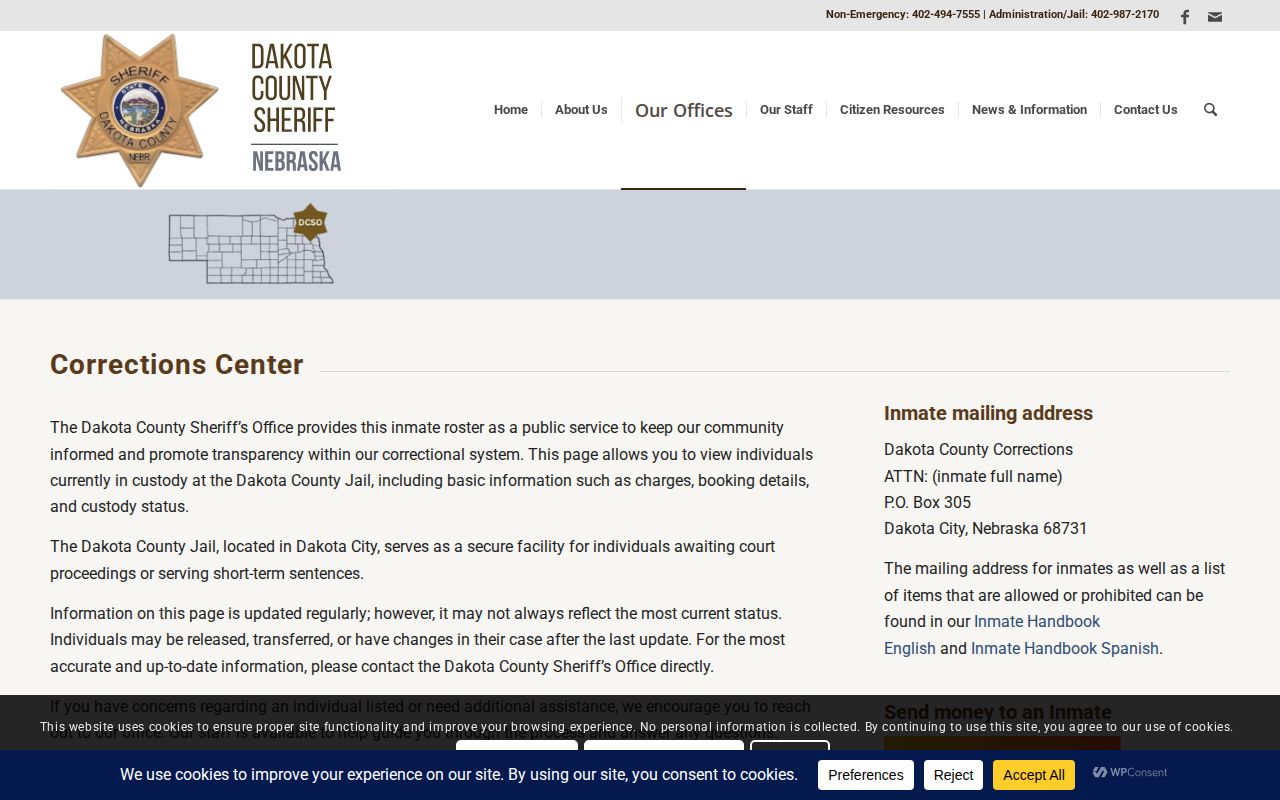
A Dakota County booking record begins the moment someone enters the jail system. Expect a jail identifier, booking date, charges, bail, and the arresting agency. That last field matters most. It shows where the original report lives, whether the arrest came from South Sioux City Police, the Dakota County Sheriff’s Office, Nebraska State Patrol, a court hold, or another agency. A booking photo, when one exists and can be released, is just the identification image tied to the arrest. The public roster tracks current custody only. So an entry can lag behind a release or transfer. Treat any roster line as a single point in time, then confirm the outcome in court. The Dakota County Corrections Center describes its roster the same way: built for people currently in custody and subject to change.
That limitation matters most after a short stay. Someone can be booked and released before any later roster check, yet the arresting agency or the court may still hold a releasable record of the arrest.
- Booking
- Jail intake and creation of a county custody record.
- Bail
- A release condition or amount, not a sentence or finding of guilt.
- Disposition
- A status or outcome label. A jail label is not the full court history.
Dakota County Booking Record Fields
The JDS interface linked by the sheriff gives the clearest field-level view of a custody entry. Its main table lists Jail ID, Photo, Name, Charges, Current Disposition, and Total Bail. Opening one result may add detail. Expect blanks and delays. Formats can differ from a court case file. Use the entry as a pointer toward the original agency, not a complete history.
| Field | What the Dakota County entry can show |
|---|---|
| Jail ID | A local identifier for the custody entry, not a conviction number. |
| Photo | A column or link when the live result actually supplies one. The observed text view did not render an image. |
| Name | The name used by the jail, which can vary by spelling, suffix, or alias. |
| Charges | Charges recorded at booking or current custody, which can differ from later filed charges. |
| Current disposition | A jail-system status such as active, dismissed, or sentenced to jail, not a complete court history. |
| Total bail | The displayed release amount or condition. It does not establish immediate release eligibility. |
| Book date | The date of county booking. It may differ from the arrest date after a transfer or warrant hold. |
| Attorney and next court date | Details when populated. A blank does not establish that there is no attorney or court setting. |
| Arresting agency | The agency credited with the arrest or hold, useful when seeking the original report. |
| Release date and SID number | Additional detail when entered. A missing release date can reflect custody, lag, or another status. |
The public interface has real limits. It will not always show an original photo, every filed document, or a full disposition. A blank field is not a negative answer either. For anything time-sensitive, the jail and the court remain the better confirmation points.
Dakota County Records and Photos
Start with the sheriff’s Records & Reports route for a booking record or a releasable photo. Dakota County publishes no photo-request form, no fee schedule, and no promised turnaround. The records page says requests are generally made in person unless directed otherwise. Government identification is required. Processing fees can apply. Give the custodian enough detail to locate the correct entry. Ask for an estimate before you authorize any charge.
Dakota County Sheriff’s Office
1601 Broadway
PO Box 305
Dakota City, NE 68731
Main: 402-987-2170
Records and non-emergency: 402-494-7555
The office directs records requests through the official in-person route unless it gives other instructions.
- Start at the sheriff’s Records & Reports page and identify the requested booking record, photo, date, or field.
- Provide the full name, approximate arrest or booking date, location, arresting agency, and Jail ID or case number if known. Bring identification for an in-person request.
- Ask for the booking record, releasable photo, charges as recorded, booking and release dates, and any releasable disposition information. Ask what is withheld and why if material is redacted.
- Request a current estimate of fees and time. Under Nebraska’s public-records statute, §84-712, an agency generally must respond as soon as practicable and within four business days with access, an estimate, a lawful denial, or an explanation that the request is extensive.
One caveat about the four-business-day rule. It covers the response or estimate, not a promise that every report or image is releasable. Active investigations, protected information, juvenile restrictions, sealing, and other legal limits can all shape what you receive. A South Sioux City arrest may call for a request to that agency itself. Dakota City and Homer requests generally route through the sheriff. For a separate state route, the Nebraska State Patrol criminal-history request page describes a $30 request with its own identity and timing rules.
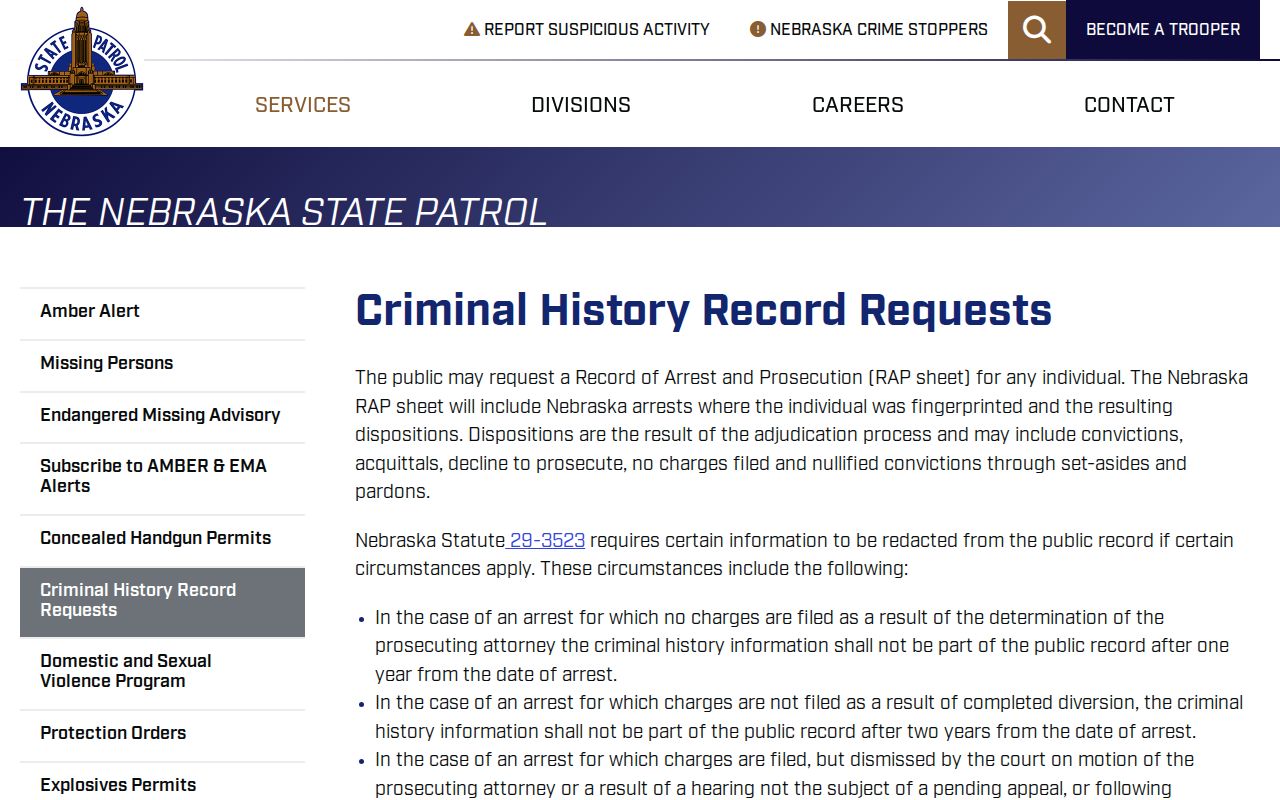
That state request is not a county booking-photo service. It serves the state criminal-history route. For a county booking file, the sheriff stays the first custodian.
Busted Mugshots and Nebraska Law
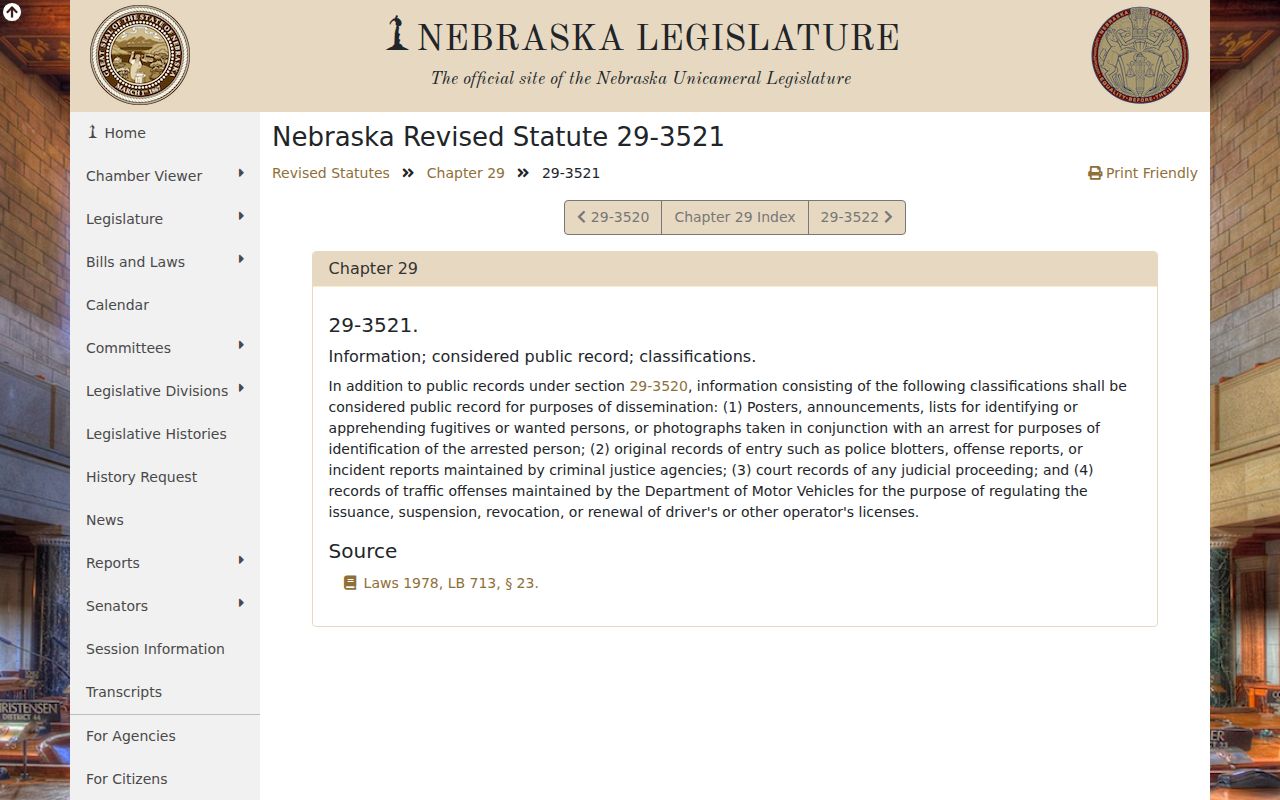
Nebraska law treats photographs taken during an arrest for identification as public criminal-history information under §29-3521. The statute also reaches certain original blotters, offense and incident reports, and court records. It does not force Dakota County to post every image online. Nor does it override a lawful withholding rule. The live JDS roster has a Photo column, though the text results did not confirm a displayed image for every entry. Check the official result first. Then use the county records process if you need a releasable image. The §29-3521 arrest-photograph provision from the Nebraska Legislature is the basis for this framework.
Other Nebraska rules can still limit access. Investigative material may be withheld or redacted. Juvenile records carry stronger confidentiality protections, so a juvenile’s identity or photo should never be republished from a booking source.
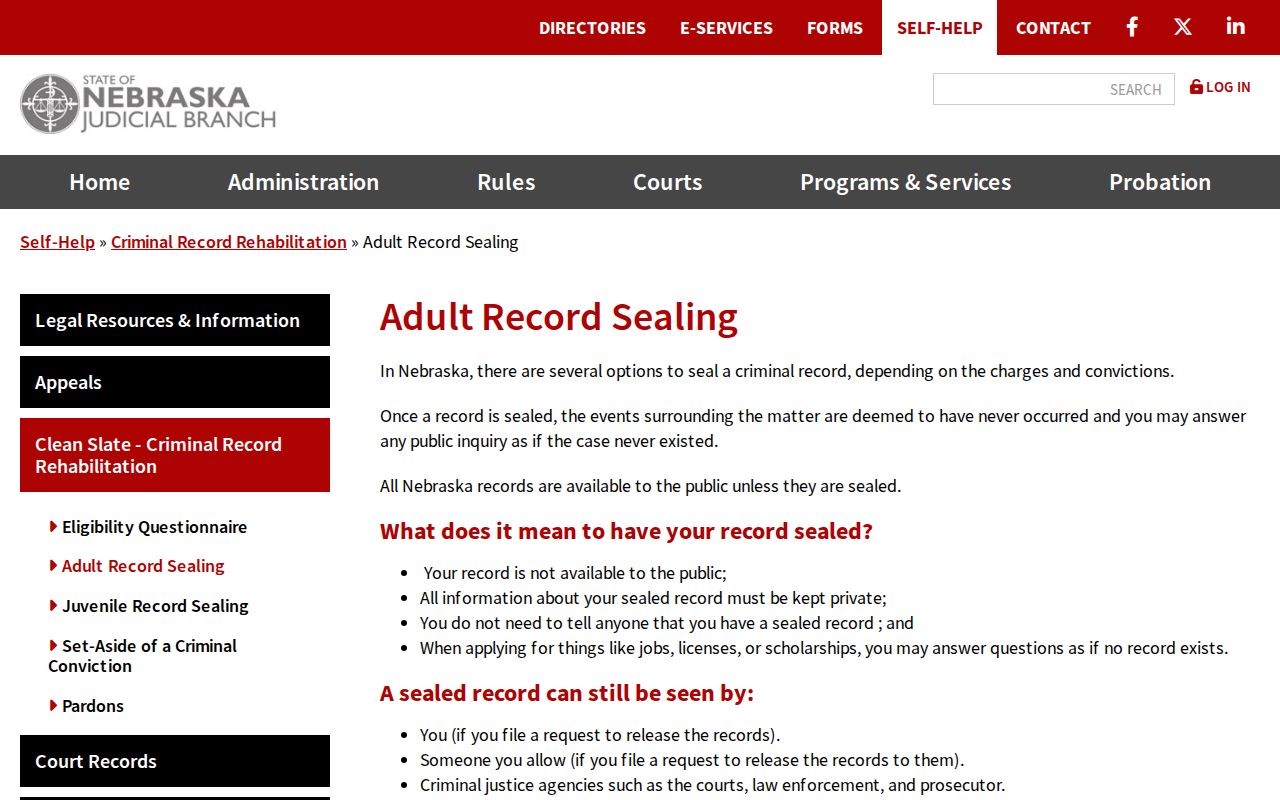
Sealing and expungement are not the same fix. Set-aside is a third route with its own rules. The Judicial Branch explains that sealed adult records leave public view, while a law-enforcement-error expungement follows a separate statutory path. A court order or corrected disposition should go to the county custodian. On the unofficial side, the verified Dakota County section at Mugshots.com is historical. Its record-maintenance route takes qualifying requests with no fee. Results are not guaranteed, and it cannot replace fixing the official source first. For the court route, the Judicial Branch’s adult record-sealing guidance explains when a motion may be needed.
Old third-party entries have a way out. The publisher offers a free record-maintenance process, and it works when you supply solid documentation from a court or agency. That means paperwork, not just a claim. Start there if an entry qualifies. One more wrinkle: a search engine can keep showing a stale result even after the official record is corrected. An outdated-content request to the engine may clear that lingering listing. It will not touch independent copies that other sites already made, though.
Dakota County Booking Timing and Bail
Timing here is loose. The Dakota County roster refreshes regularly. No fixed posting hour exists. A record can lag because of a release, a transfer, or case activity. So work the sequence. Check the official current-custody result first. If timing matters, call the sheriff at 402-987-2170 or the records and non-emergency line at 402-494-7555. Someone may already have left custody, so request the booking record directly. A missing roster line does not prove there was no arrest.
JDS shows a Total Bail figure and sometimes a Release Date. Read the fine print. The county promises no bond-out timing. A blank release field could mean the person is still held, the entry is mid-update, or the status simply looks different than it is. Confirm custody with the jail. Then track any court date through the court system.
Does a roster photo column mean a public photo exists? No. Look at the live JDS entry for a real image or link. If nothing is shown, ask the sheriff whether a releasable booking photograph exists at all.
South Sioux City Police and the sheriff share the Law Enforcement Center at 701 W. 29th Street. The shared building does not make every event a sheriff arrest. Compare the arresting agency, the custody location, and the court record before drawing conclusions. The sheriff’s vehicle-technology transparency portal is separate from custody records too. Its camera retention and hotlist material is not an arrest or photo feed.
Find Dakota County Busted Mugshots
Pick the source that fits the custody situation. The Dakota County Corrections Center roster comes first for anyone still held in county custody. A fast release can drop someone out of that view entirely. A transfer to a state or federal system calls for a different locator. The steps that follow keep those distinctions intact. One generic web result is never a complete Dakota County arrest record.
- Open the sheriff-linked JDS roster and search or review the name. Compare the book date, charges, current disposition, total bail, arresting agency, and release date.
- Inspect the live Photo field. If no image or link appears, do not borrow one from another source. Ask the sheriff for a releasable booking record or photo.
- For a released person or an older booking, submit the county request and check the arresting agency. Use the court record to find later case events.
- For a person transferred after sentencing, use the NDCS locator. For federal or immigration detention, use the corresponding federal locator rather than assuming the county roster is complete.
Some tools you might expect simply are not there. No Dakota County Sheriff app is documented for jail information or photos. No verified daily arrest feed exists either. That pushes official web sources to the front. They name the custodian and show the limits of a current-custody search. A nonofficial lead can still help you pin down a date or a name. Just confirm it with the sheriff, the arresting agency, or the court before you rely on it.
| Channel | Photo status | Access and custody scope |
|---|---|---|
| Dakota County Corrections Center and JDS | Photo column exists; live display is not guaranteed. | Official current-custody starting point for the county jail population. |
| Sheriff Records & Reports | Ask whether a releasable booking photo exists. | Official request route for county booking files, released-person questions, and unavailable roster detail. |
| Nebraska court systems | Not a booking-photo source. | Official case, register, and disposition route after a booking. |
| NDCS incarceration search | No public profile photo was confirmed. | Official state-corrections search for sentenced or incarcerated people, not new county bookings. |
| BOP and ICE locators | No public county-style photo field was confirmed. | Federal or immigration custody routes, separate from Dakota County custody. |
| Mugshots.com historical archive | Unofficial historical display. | Verified Dakota County archive, with dates observed through older years. It is not current custody. |
| Siouxland Scanner | Shows a member-only photo indicator. | Unofficial regional discovery index. Its county, date, name, and charge filters can be incomplete or stale. |
Treat these two with caution. Siouxland Scanner’s Dakota County page is secondary, and the site itself warns its information may be incomplete or out of date. Mugshots.com is secondary as well. It is an older archive, not a live view. Neither one tells you whether a person is in custody now. Neither reveals the county’s actual photo policy or how a case ended.
Busted and Booked: Dakota County Roster
Start at the Corrections Center page, which links to the JDS Dakota County New Inmate Roster. That roster is the official current-inmate entry point. It carries a run date and time and splits into male and female sections. Results lay out Jail ID, Photo, Name, Charges, Current Disposition, and Total Bail. Open a detail view and you may find more. Think SID number, Book Date, Attorney, Next Court Date, Arresting Agency, and Release Date. Keep in mind what the screen is. It is a custody tool, not a chronological log of everyone booked in a given period.
The official JDS Dakota County roster is the interface to use for a current-custody search.
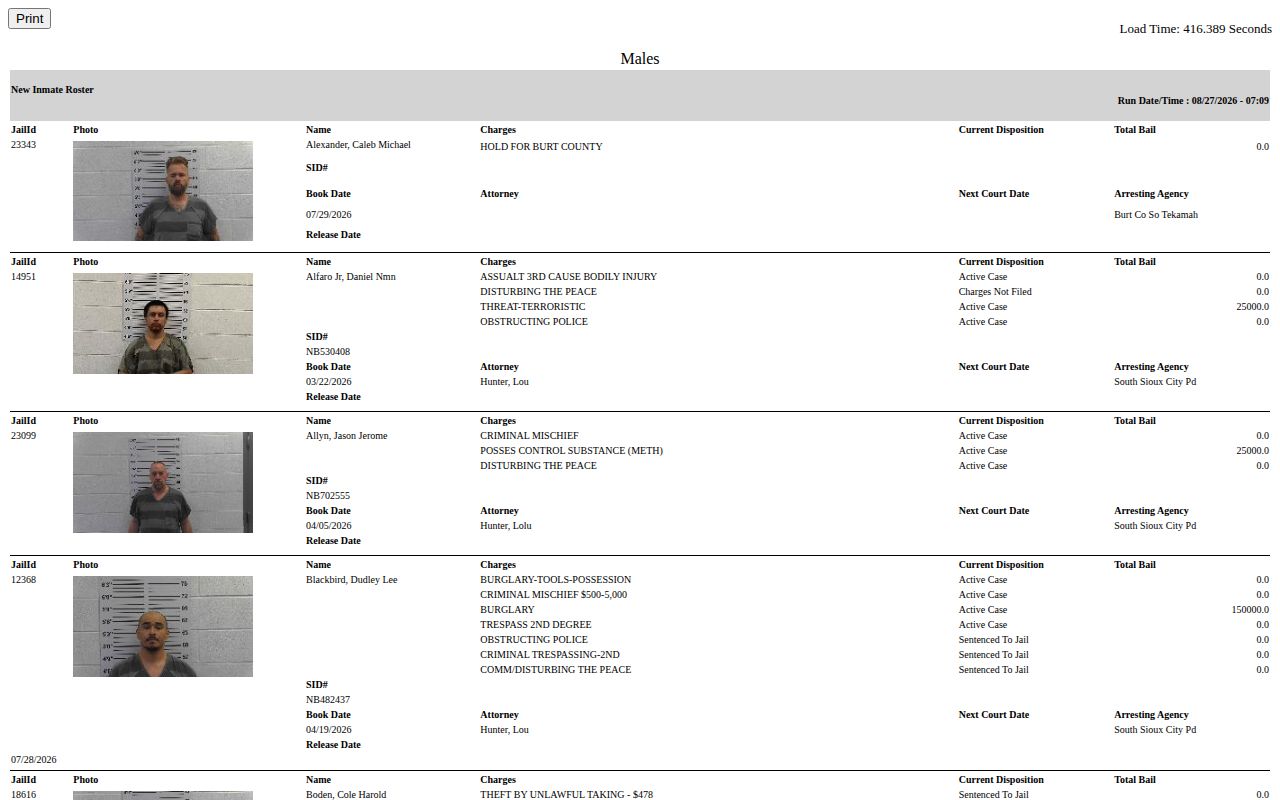
The Photo column needs careful wording. The interface supports a photo field. Yet a text-only view of the results renders no photo images. So describe only what the live official entry shows. An image or link in that result is the only thing that counts as an available booking photo.
- Name and Jail ID
- Use both when possible because names, aliases, and ordering can vary.
- Book Date and Arresting Agency
- These distinguish a county booking from an earlier arrest, transfer, or outside-agency hold.
- Current Disposition, Bail, and Release Date
- Read them as the jail’s current display, then verify time-sensitive facts with the jail and court.
- Begin with the Corrections Center link and locate a possible matching name.
- Open the entry and record the book date, arresting agency, charges as displayed, disposition, and bail.
- Check whether a real Photo image or link is present, rather than inferring a photo from the column heading.
- Call or make a records request when release status, a photo, or the underlying record is needed quickly.
No update schedule is published. There is no online retention period either. The roster may show older dates or resolved labels at times. That does not mean released records stay online for any set number of days.
Busted Booking Feeds in Dakota County
Dakota County has no verified arrest feed. No same-day lists. No 72-hour logs, weekly roundups, or city-by-city busted reports. The sheriff points people to the current JDS roster instead. South Sioux City's Police Documents area has no daily public arrest table either. This gap matters. Someone booked and released on bond may never appear in a later custody check.
For something recent, read the roster's Book Date. If the name is missing, use the sheriff's records request route. Timing counts there too. Siouxland Scanner offers a multi-day lead and filters by county, date, name, and charge. Photo details sit behind a membership wall. It is not a county feed, and entries can lag, drop, or misstate facts. Confirm anything you find with the office that created the record.
Older cases need a different approach. Request the booking record from the sheriff. Ask the arresting agency for its report where appropriate. Then follow the court case to learn what happened after booking. The statewide retention schedule governs what agencies keep, not how long a vendor roster stays online.
Note: With no fixed booking-feed window, a current roster search is never a complete list of recent Dakota County arrests.
Dakota County Custody and Court Lookup
A booking starts the paper trail. It is not the finish line. JDS can display a next court date and current status. The deeper record lives elsewhere. Register entries, document images, party names, offenses, and ongoing court activity continue in the official state systems. The multi-court calendar even warns that a blank online result does not mean no court date exists. So when a roster field looks empty or stale, take the court route rather than guessing.
The Nebraska JUSTICE trial-case search is the official starting point for trial cases in Dakota County and every other Nebraska county.
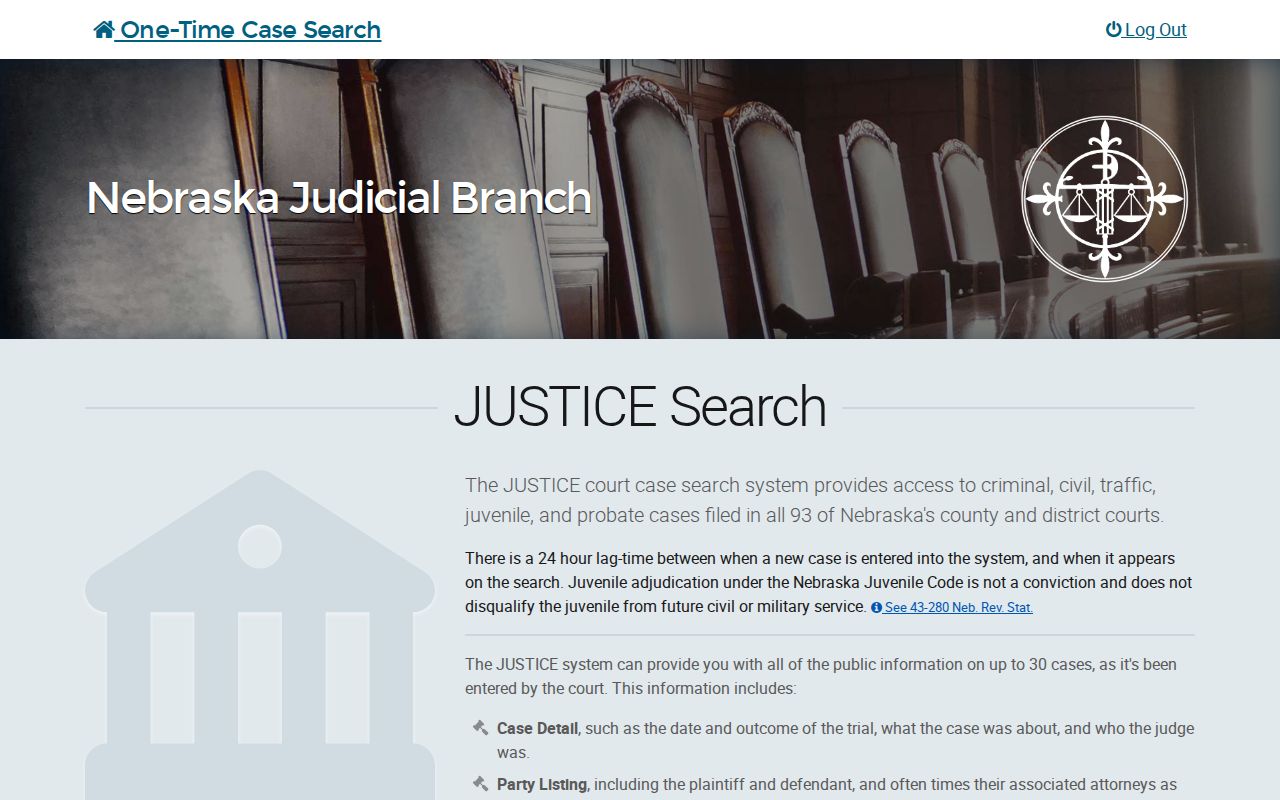
What a person is booked on is only the first chapter. Charges get amended, dropped, plea-resolved, or taken to trial. The outcome lives in the court file, not the jail list. Three numbers handle the follow-up here. The county judge sits at 402-987-2145. The Clerk of the District Court is 402-987-2114. The county attorney can be reached at 402-987-2151. Each office plays a distinct role. Court staff and the register of actions are the right places to confirm where a case stands.
The Nebraska Judicial Branch case-information service opens the wider official case-information path.
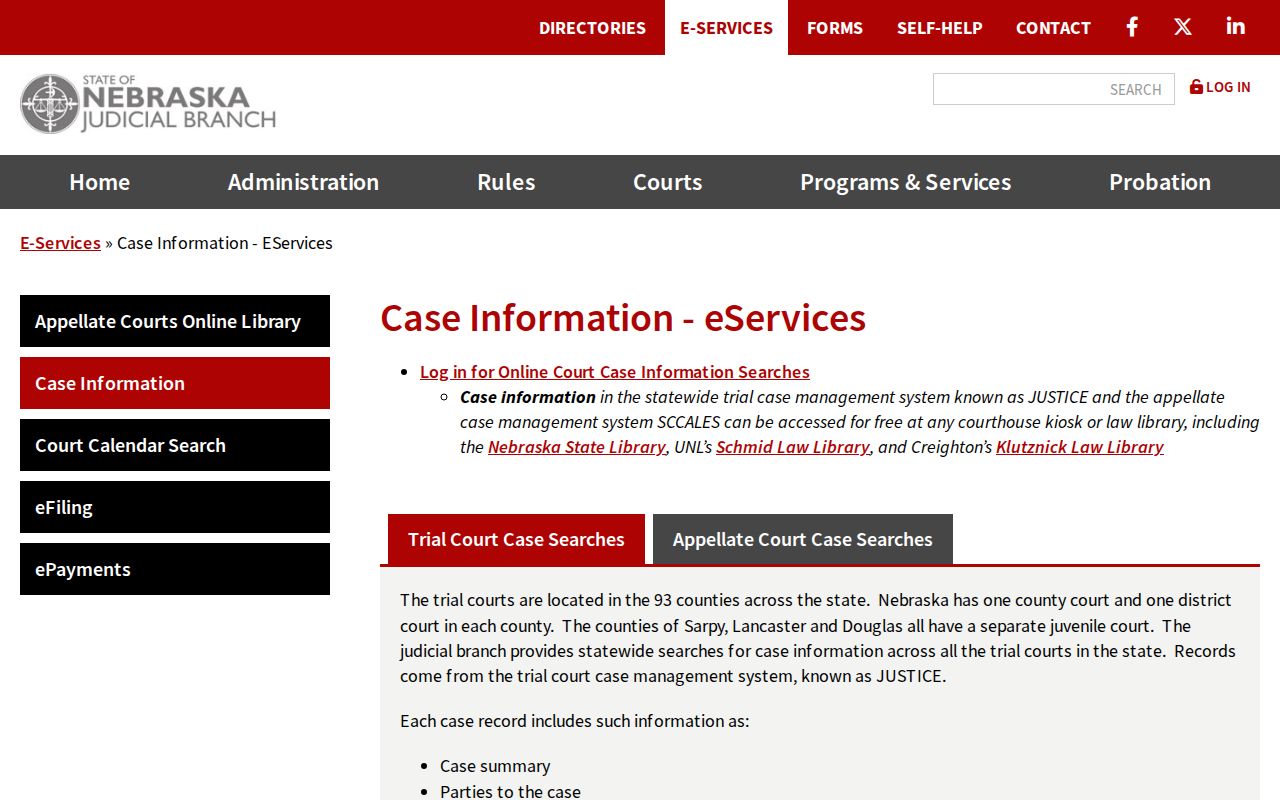
Keep the two records straight. The court file gives you the legal outcome. The jail view gives you a custody snapshot, nothing more.
| Where the person is | Best Dakota County record route | What the result means |
|---|---|---|
| Just booked or currently in county custody | Corrections Center roster, then sheriff confirmation | Current custody and booking fields may be visible, subject to update lag. |
| Released from county custody | Sheriff records request and arresting agency | The live roster may no longer show the person, while the booking file can still exist. |
| Case moving through court | JUSTICE, Judicial Branch case information, calendar, and clerk | Use this route for filings and later disposition, not just the jail label. |
| Transferred after sentencing | NDCS incarceration search and NDCS records route | This is state-corrections custody, not proof that the person remains in the county jail. |
Dakota County Busted Mugshots Elsewhere
State prison is a different stage of custody from the Dakota County Corrections Center. The Nebraska Department of Correctional Services runs its own incarceration search. It takes a last and first name or a DCS ID behind a captcha screen. It covers people in state custody, usually after sentencing and transfer. The freshly arrested population stays back in the county. No public profile-photo field could be confirmed there either. Treat the locator as a custody check, not a photo service.
The NDCS incarceration search is the form to use once a county roster no longer matches the person's custody status.
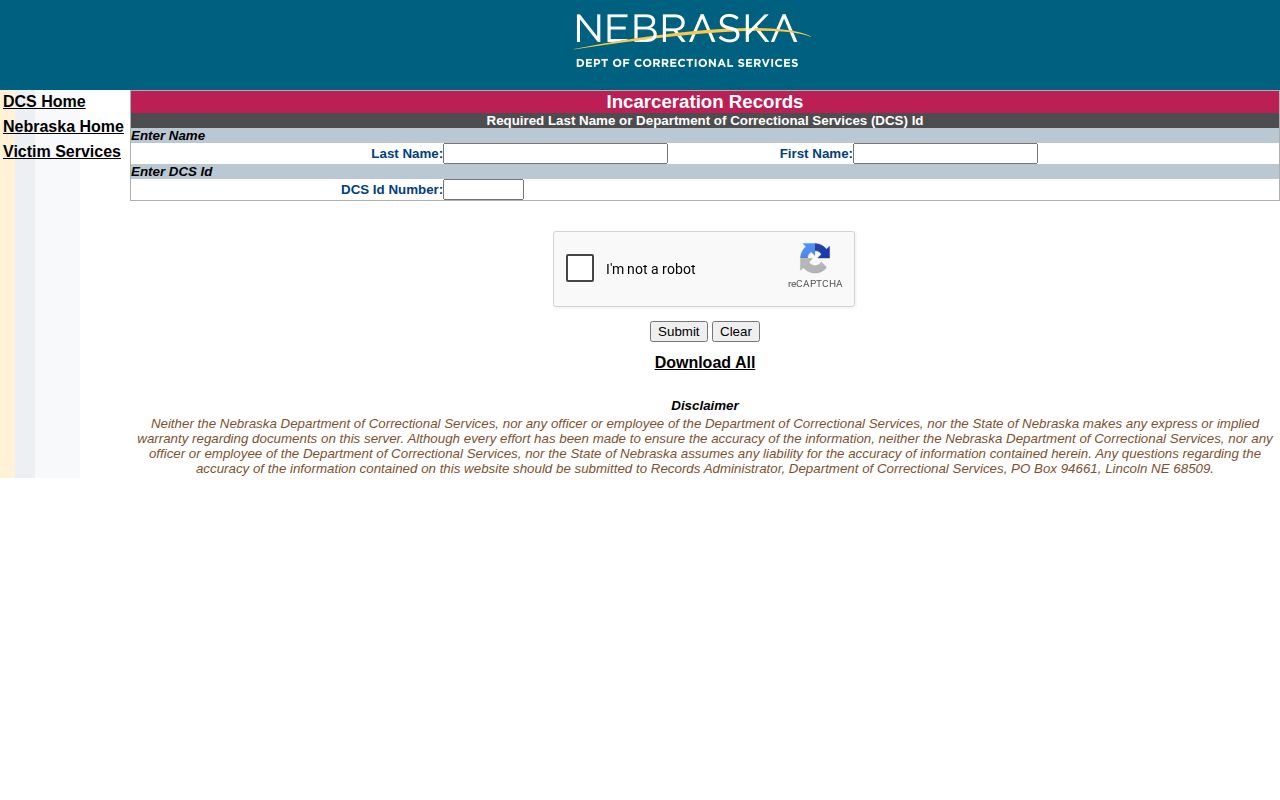
Federal and immigration custody run on entirely separate systems. The Federal Bureau of Prisons locator reports current or released federal custody by name or register number. ICE runs its own Online Detainee Locator with strict identity-match requirements. Neither one posts a county-style booking gallery or a confirmed public photo field. And an empty Dakota County roster tells you nothing about whether someone is in federal hands, so do not read absence as an answer.
Dakota County Arrest Statistics and Alerts
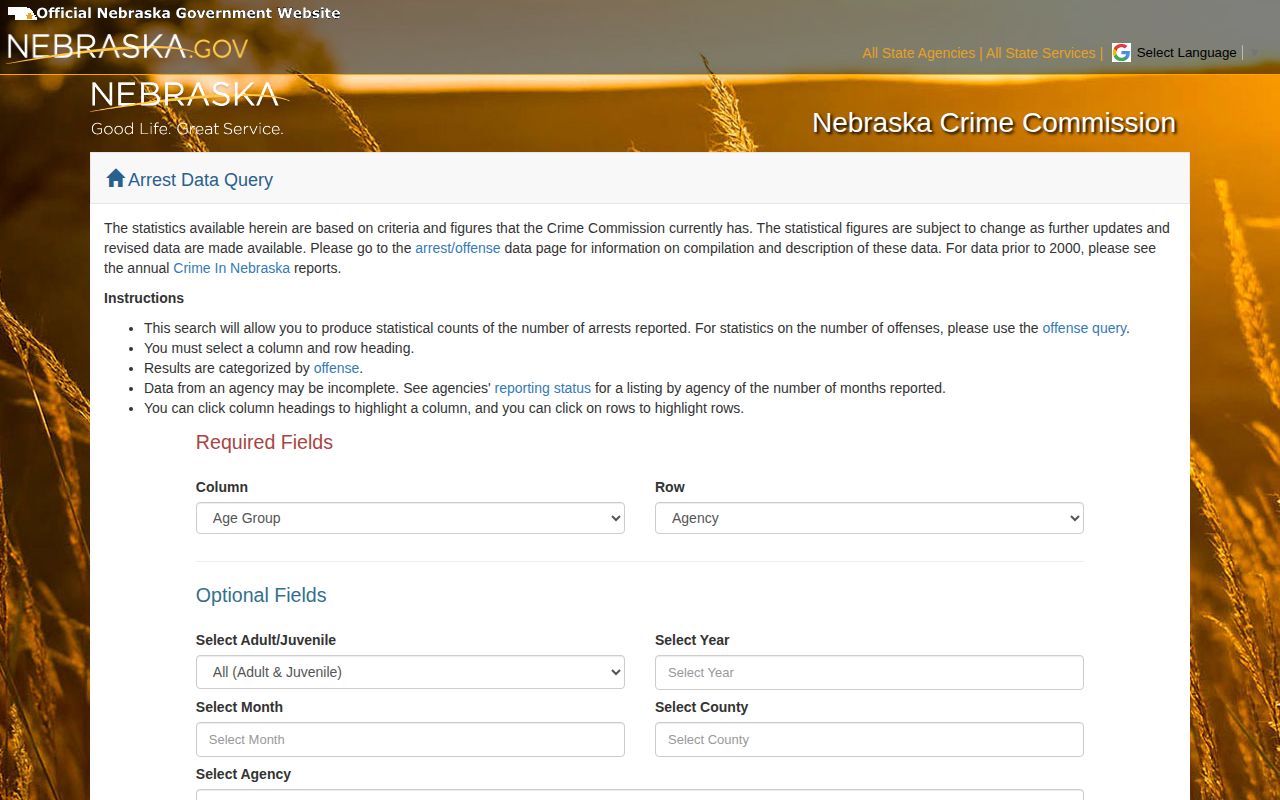
Counting arrests answers a different question than finding one. Nebraska's Crime Commission query filters by adult or juvenile category, year or month, county, agency, and offense, returning raw counts. The agency itself cautions that numbers shift and reports come in incomplete. Use it for aggregate context. It cannot identify a person, confirm a current booking, or surface a photo.
The Nebraska Crime Commission arrest-data query is the official tool for those count-based searches.
Registered victims have a faster lane. Nebraska's NEVCAP and NDCS Victim/Witness systems send alerts on custody events, including release, transfer, court return, and parole activity. Closer to home, Dakota County Victim Assistance works out of the Law Enforcement Center and answers at 402-494-7550. These are notification systems, though, not public name or photo feeds.
Dakota County's Flock transparency page is separate from booking records too. The portal lists four cameras, a 30-day data-retention statement, and real-time hotlist features. Vehicle technology like that changes often, and a detection alone never proves an arrest followed.
Busted Mugshots by Dakota County City
The county's three city pages follow the agency route rather than inventing separate galleries. South Sioux City runs its own police department and shares the Law Enforcement Center with county law enforcement. Dakota City buys its law-enforcement services from the sheriff. Homer lists the sheriff as its patrol agency. Whenever those arrests lead to county custody, the Dakota County Corrections Center is where the booking happens.
- South Sioux City: South Sioux City Police Department arrests can lead to county custody; the city page explains its police documents route and the county roster connection.
- Dakota City: sheriff-contracted law enforcement means the county sheriff is the primary local record route and the Corrections Center is the booking destination.
- Homer: the sheriff patrols the village, so county records and the Corrections Center provide the relevant custody path.
Busted mugshots for each Dakota County community sit on their own city pages, reachable through the sidebar or footer navigation. The countywide ground rules do not shift from one city to the next. An agency label, a live roster hit, and a court outcome can each speak to a different slice of the same story, so treat them as separate pieces rather than one tidy answer.
Dakota County Historic Booking Records
A booking record can survive long after it leaves the public web. Nebraska sets retention periods for adult inmate files, fingerprints, and jail registers through its statewide County Sheriff schedule, and that schedule is distinct from any online JDS policy. Schedule 15 allots 50 years for felony adult inmate files and 25 for misdemeanors, with a five-year option if a notation is added and the record is kept elsewhere. Fingerprints and jail registers get their own periods. Juvenile materials and archives-review items follow separate rules. So a roster that no longer shows a result is not proof the county destroyed anything.
State law also mandates a jail register noting each commitment and discharge. For an older Dakota County lookup, contact the sheriff with the person's name, a rough date, the arresting agency, and any case or Jail ID you have. If staff mention a transfer, microfilm, or archived series, ask which one governs your request. The county retention page links to Nebraska Records Management, and History Nebraska offers an archival route for aging government materials.
- Check the current roster only for a still-visible current-custody entry.
- Check the official court record for the case and its disposition.
- Request the county booking file, jail-register entry, and any releasable photograph from the sheriff.
- Ask whether the file is held locally, retained under the statewide schedule, transferred, or restricted by sealing or juvenile rules.
- Use the appropriate records-management or archive route with the date range and record-series information supplied by the custodian.
Digging into old bookings takes the same care as a fresh search. Records get sealed, restricted, or simply lose pieces over time.